The sonnet figures so prominently in the Petrarchan tradition that not everyone appreciates its versatility. In fact, the sonnet form lends itself to pithy treatment of any subject, in a wide variety of tones. Camões, Francisco Rodrigues Lobo, and Violante do Céu work within the Petrarchan framework in their ingenious poems, whereas «Alcipe» and Bartolomé Leonardo de Argensola exploit the sonnet’s potential for philosophical reflection. In his delightful jab at Goethe’s youthful masterpiece, Nicolai suggests that Werther’s famous sorrows were brought on by constipation, showing that the sonnet is a serviceable vehicle for humor.
It is never easy to translate poetry, but the sonnet may be the most accomodating form for the translator. It is naturalized in all European languages; with a little ingenuity, the rhyme scheme and internal structure can be preserved. Moreover, we all have a good sense of how to read a sonnet, so that there are fewer cultural barriers than usual. Thus, the translator has a better than average chance of producing a readable poem in the new language that retains some of the good qualities of the original. (T)
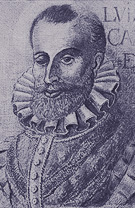
Luís Vaz de Camões,
engraving from the
XVIth century
POEMS | POEMAS | GEDICHTE
[Tu, deusa tutelar da solidão...], Alcipe
[Busque Amor novas artes...], Luís Vaz deCamões
[Amor, se uma mudança imaginada...], Violante do Céu
[Fermoso Tejo meu...], Francisco Rodrigues Lobo
[Yo os quiero confesar...], Bartolomé Leonardo de Argensola
«Freuden des jungen Werthers», Christoph Friedrich Nicolai
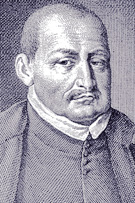
Leonor de Almeida,
known as Alcipe,
c. 1780
SOURCES| FONTES | FUENTES | QUELLE
(Or) ALCIPE (Leonor de Almeida Portugal Lorena e Lencastre, Marquesa de Alorna), «Soneto 1», in: SOARES AMORA, A. (ed.), Presença da Literatura Portuguesa, II: Era Clásica, São Paulo: Difusão Européia do Livro, 1974, vol. II, p. 285.
(Or) CAMÕES, L. V. de, «Soneto 3», in: SOARES AMORA, A. (ed.), Presença da Literatura Portuguesa, II: Era Clásica, São Paulo: Difusão Européia do Livro, 1974, vol. II, p. 37.
(Or) CÉU, V. do, «Soneto 1», in: SOARES AMORA, A. (ed.), Presença da Literatura Portuguesa, II: Era Clásica, São Paulo: Difusão Européia do Livro, 1974, vol. II, pp. 131-132.
(Or) RODRIGUES LOBO, F.,[Fermoso Tejo meu...], in: SOARES AMORA, A. (ed.), Presença da Literatura Portuguesa, II: Era Clásica, São Paulo: Difusão Européia do Livro, 1974, vol. II, p. 127.
(Or) ARGENSOLA, B. L., in: GAOS, V. (ed.), Diez siglos de poesía castellana, Madrid: Alianza Editorial, 1987, pp. 136-137.
(Or) NICOLAI, F. C., «Freuden des jungen Werthers», in: http://gutenberg.spiegel.de/autoren/nicolai.htm.
LINKS | LIGAÇÕES | ENLACES
Biografia de Leonor de Almeida, Diccionário histórico, 1904-1915, vol. I, págs. 324-326, ed. electrónica de M. Amaral.
Milava PRAVDOVÁ, «Algumas correntes da inspiraçaõ na poesia lírica de Camões», Philologica, 71 (formato .pdf).
Sonetos de los hermanos Argensola, edición de Ramón GARCÍA GONZÁLEZ, Biblioteca Virtual Miguel de Cervantes.
SOME FAMOUS SONNETS | ALGUNS SONETOS FAMOSOS | EINIGE BERÜHMTE SONETTE
«Sonnet VII», William Shakespeare
«On the Castle of Chillon», Lord Byron
«Apenas vi do dia a luz brilhante», Manuel du Bocage